

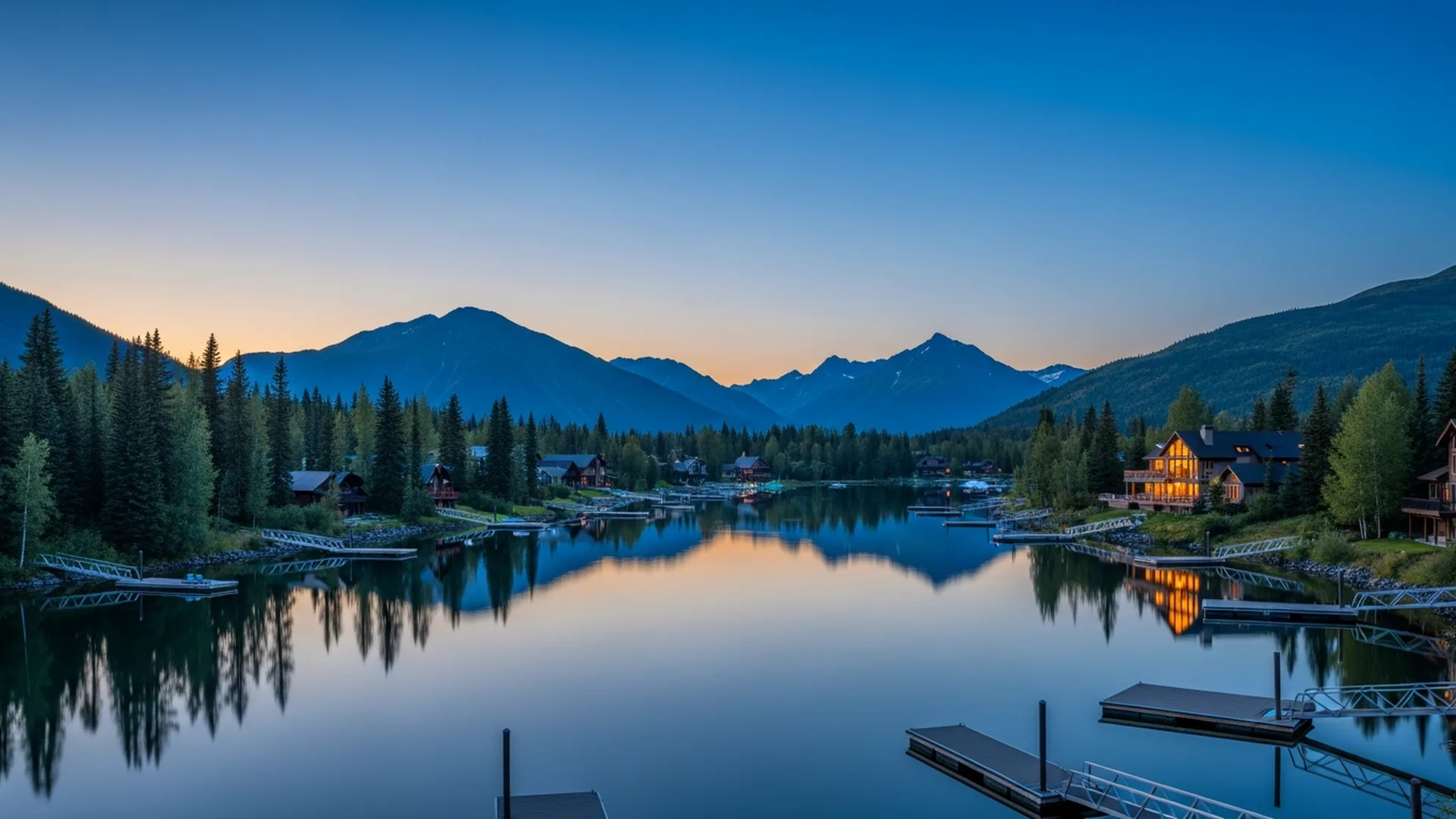
Lower Fire Lake is a small residential lake in Eagle River, inside the Municipality of Anchorage, at roughly 61.353°N, -149.546°W in the 99577 ZIP code, about 13 to 17 road miles from downtown Anchorage via the Glenn Highway. Homes here range from wooded waterfront lots to spacious houses set back in spruce and birch, with paddling, light fishing, and ice fishing on a calm lake and the greenbelt and Chugach State Park trail networks nearby. Many properties are on private well and on-site septic, which triggers a Municipality of Anchorage Certificate of On-Site Systems Approval (COSA) at title transfer and Alaska DEC separation rules that matter most on tight waterfront lots. Lower Fire Lake is one of the few municipal lakes that allows small outboard motors of 50 horsepower or less at no-wake speed near shore. For buyers, the appeal is water access and trails with a manageable Eagle River commute; the main due-diligence items are well/septic condition and reliance on the single Glenn Highway corridor.
Of all the water in Eagle River, Lower Fire Lake is the one people picture when they say they want a lake without leaving town. It is compact, wooded, and genuinely residential — not a recreation reservoir you drive to, but a lake that homes actually sit on. Spacious houses and wooded waterfront lots line its shore, and the greenbelt bike path along the Glenn Highway runs right past it, connecting the lake into miles of forested paths with the Chugach Mountains filling the skyline.
In four decades of watching this corridor, I have learned that the buyers who do well on a lake like this one are the ones who separate two questions early: what makes the setting special, and what the property will actually require of them. On Lower Fire Lake those two questions collide directly, because the same waterfront that creates the value also brings Alaska’s tightest well-and-septic geometry into play. This guide walks through both, grounded in the Municipality of Anchorage and Alaska DEC rules that govern it.
- Lower Fire Lake is in Eagle River within the Municipality of Anchorage, at approximately 61.353°N, -149.546°W (ZIP 99577), roughly 13–17 road miles from downtown Anchorage via the Glenn Highway.
- It is a residential lake with wooded waterfront lots; the Glenn Highway greenbelt bike path runs past it and connects to a larger trail network toward Chugach State Park.
- Per Municipality of Anchorage Parks and Recreation, it is one of the few municipal lakes allowing outboard motors of 50 hp or less, at no-wake speed within 100 feet of shore during posted hours.
- Many homes are on private well and on-site septic, which requires a Municipality Certificate of On-Site Systems Approval (COSA) to transfer title — a rule in force since a 1998 ordinance.
- Alaska DEC 18 AAC 72.520 requires a 100-foot separation between a lake’s high water level and a septic system; a private well must sit at least 100 feet from septic under 18 AAC 72.100.
- The Glenn Highway is the single main corridor to the Anchorage Bowl, so winter weather or a collision can lengthen an otherwise 20–30 minute commute.
- Broader Eagle River luxury inventory (larger homes on an acre or more east of town) has been documented reaching from the low $900,000s to above $1 million; lake-specific figures vary and are best confirmed against current listings.
Where Is Lower Fire Lake, and What Is the Setting Like?
Lower Fire Lake sits in Eagle River, which is itself inside the Municipality of Anchorage rather than a separate town — a point that trips up out-of-state buyers constantly. The U.S. geographic record places the lake at latitude 61.353 and longitude -149.546, in the 99577 ZIP code. Eagle River proper sits on the Glenn Highway roughly 12 to 17 miles north of downtown Anchorage, depending on which source and which exit you measure from; The Milepost lists 13 miles to downtown, and Alaska.org describes the community as about 12 miles up the freeway.
The character is wooded and water-facing. Lake.com describes the setting as a quiet residential corner surrounded by white spruce and birch, with the Bicentennial-area trail system minutes from the shoreline and the Chugach filling the horizon above the treeline. Unlike a bluff neighborhood where the view is the whole point, here the water is the anchor — a small, calm surface that Lake.com notes is well-suited to paddleboarding and kayaking, with the wooded shoreline providing shade and stillness.
| Fact | Detail | Source |
|---|---|---|
| Coordinates / ZIP | ~61.353°N, -149.546°W; ZIP 99577 | USGS/GNIS via HomeTownLocator |
| Jurisdiction | Eagle River, within the Municipality of Anchorage | Municipality of Anchorage |
| Distance to downtown Anchorage | ~13–17 road miles via Glenn Highway (20–30 min) | The Milepost; Alaska.org |
| Water use | Outboards ≤50 hp allowed; no-wake within 100 ft of shore, posted hours | MOA Parks & Recreation |
| Recreation | Paddling, fishing (pike, rainbow trout, char), ice fishing; greenbelt path | Lake.com; MOA |
What Does It Cost to Buy a Home Near Lower Fire Lake?
I want to be precise here rather than confident-and-vague. There is no separately published, reliable price index for Lower Fire Lake alone, and I will not invent one. What is documented is the broader Eagle River luxury range: an independent neighborhood guide (citing the president of the Alaska Association of Realtors) describes larger homes on an acre or more, east of town, reaching from the low $900,000s to above $1 million, with more moderate four- and five-bedroom homes built in the past decade in the upper $400,000s to mid $700,000s. Waterfront and larger-lot properties generally sit toward the upper end of any local band.
The honest takeaway: treat lake frontage as a premium attribute layered on top of Eagle River’s pricing, and confirm the number against live comparables for the specific lot, because water frontage, lot size, and septic capacity move value more than square footage alone on a lake like this.
What Should You Check on a Well-and-Septic Property Here?
This is the moat topic for any Eagle River lake lot, and it is where I earn my keep. Many homes in this part of Eagle River draw on a private well and dispose through an on-site septic system rather than public utilities. That is normal here — but it changes the transaction in ways portal listings rarely explain.
First, the transfer rule. Because the property is in the Municipality of Anchorage, an August 1998 ordinance requires a Certificate of On-Site Systems Approval (COSA) to transfer title on any home served by a well or septic system. The Municipality issues the COSA after a registered civil engineer inspects and tests the system — a well flow test, a septic absorption-field adequacy test, water sampling, and verification of separation distances. Per the Municipality’s guidance, allow roughly five days for the department to review a complete, passing package. Local engineering firms report that well and septic tests are generally valid for two years, bacteria and nitrate samples for 90 days, and that the tank must be pumped within the year before approval.
Second, the geometry — and this is where waterfront intensifies everything. Alaska DEC regulations at 18 AAC 72.520 require a minimum 100-foot separation between the mean annual high water level of a lake and a septic tank, soil absorption system, lift station, or sewer manhole. Separately, 18 AAC 72.100 requires a private drinking-water well to sit at least 100 feet from a septic system and other contamination sources. DEC also requires at least 50 feet of horizontal separation between an absorption field and a steep slope. Stack those buffers onto a lakefront lot and the buildable envelope for a new or replacement septic system can shrink fast — which is exactly why lot size and layout deserve scrutiny before you write an offer, not after.
What lake buyers gain here
- Wooded waterfront or lake-proximate lots inside the Municipality of Anchorage
- Paddling, fishing, and ice fishing at the door; small motors permitted
- Greenbelt bike path and Chugach State Park trails minutes away
- Eagle River commute — roughly 20–30 minutes to downtown
What to weigh carefully
- Well/septic condition and COSA outcome — test early
- Waterfront DEC buffers (100 ft) can constrain septic siting on tight lots
- Single Glenn Highway corridor — weather/incident delays happen
- Lake-specific pricing not separately published — verify vs. live comps
How Is the Commute From Lower Fire Lake to Anchorage?
The drive to the Anchorage Bowl runs about 13 to 17 road miles down the Glenn Highway, typically 20 to 30 minutes to downtown depending on your exact address and the day. The important caveat is structural: the Glenn is the single main corridor between Eagle River and Anchorage, so a collision or severe winter weather can ripple through the whole commute. Ted Stevens Anchorage International Airport is commonly about 20 to 30 minutes, traffic dependent. Locals who’ve done it for years simply build in buffer time on cold, snowy mornings and check conditions before rolling out — a small habit that separates the people who love the Eagle River trade-off from the ones who resent it.
The upside of that same geography: living out here puts Chugach State Park at your back door, and Eagle River is 15 to 20 minutes closer than Anchorage to Mat-Su Valley and Parks Highway destinations.
What Can You Do on Lower Fire Lake Itself?
For a small urban lake, it is unusually usable. The Municipality of Anchorage Parks and Recreation department lists Lower Fire Lake as one of the very few municipal water bodies where outboard motors of 50 horsepower or less are permitted — and even then, they must operate at no-wake speed within 100 feet of a dock or shoreline during posted afternoon and weekend hours. In practice that keeps the lake calm and paddle-friendly. It holds fish species including northern pike, rainbow trout, and Arctic char, with a small gravel shore-fishing area and popular ice fishing in winter. For a homeowner, that means a genuine year-round water amenity rather than a scenic pond you only look at.
Thinking of Selling on Lower Fire Lake? What Drives Value Here
Sellers on Eagle River lake lots routinely underestimate two things. The first is the COSA timeline: because a passing well-and-septic certificate is required to transfer title, getting the system tested early — before you list, if possible — is the single best way to avoid a mid-escrow scramble. Local engineers recommend exactly this, because a failed or undersized system discovered late can delay or even sink a sale. Note too that a common Eagle River surprise is a home finished with more bedrooms than the original septic was sized for, since the Municipality sizes systems by bedroom count.
The second is presentation of the water. A cleared, well-framed sightline to the lake and a deck or dock that reads as usable outdoor living move the number more than another finished basement. This is where my background helps: I hold a degree in Interior Design and spent years in furnishings and design before real estate, so I read light, flow, and finish the way a buyer’s eye actually will — and on a lake lot, staging the connection to the water is often the highest-return move. When you’re ready, I’ll build you a specific plan and a current valuation for your Eagle River home.
- Municipality of Anchorage — Certificate of On-Site Systems Approval (COSA); On-Site Water & Wastewater Section; AMC 15.55 & 15.65 (well/septic transfer requirement, process, ~5-day review).
- Municipality of Anchorage Parks & Recreation — Municipal Lakes page (Lower Fire Lake motor-use rules: ≤50 hp, no-wake within 100 ft of shore).
- Alaska Dept. of Environmental Conservation — 18 AAC 72.520 (100-ft lake-to-septic separation; 50-ft slope separation) and 18 AAC 72.100 (100-ft well-to-septic separation), via Alaska DEC / Cornell LII.
- USGS / GNIS via HomeTownLocator — Lower Fire Lake coordinates (61.353, -149.546) and ZIP 99577.
- The Milepost and Alaska.org — Eagle River location and distance to downtown Anchorage (~12–17 miles) and Glenn Highway access.
- Homes.com Eagle River neighborhood guide — documented Eagle River price bands and waterfront lots on Lower Fire Lake (attributed to the Alaska Association of Realtors president).
- Lake.com — Lower Fire Lake setting, fish species, and paddling/recreation description.
Want to see what’s available on Lower Fire Lake?
Let’s find the right waterfront lot — and check its well, septic, and buildable envelope before you fall for the view.
Frequently Asked Questions
Lower Fire Lake sits in Eagle River, inside the Municipality of Anchorage, at roughly 61.353°N, -149.546°W in the 99577 ZIP code. It lies near the Glenn Highway corridor about 13 to 17 road miles northeast of downtown Anchorage, tucked into spruce and birch below the Chugach Mountains. The Glenn Highway greenbelt bike path runs past the lake, and the Bicentennial-area and Chugach State Park trail networks are minutes away.
Yes, with limits. Under Municipality of Anchorage Parks and Recreation rules, Lower Fire Lake is one of the few municipal water bodies that allows outboard motors of 50 horsepower or less. Those motors must run at no-wake speed within 100 feet of a dock or shoreline during posted afternoon and weekend hours. It is a small, calm lake better suited to paddling, light fishing, and ice fishing than to high-speed boating.
Many homes in this part of Eagle River are on private well and on-site septic rather than public water and sewer, though it varies lot by lot. That matters at closing: because the property is in the Municipality of Anchorage, a Certificate of On-Site Systems Approval (COSA) is required to transfer title on any home served by a well or septic system. A registered engineer inspects and tests the system, and the Municipality issues the COSA once it passes.
A Certificate of On-Site Systems Approval (COSA) is a Municipality of Anchorage document confirming that a home’s well and/or septic system was inspected and tested by a professional engineer and meets municipal standards. It has been required for title transfers of well- or septic-served single-family and duplex homes since a 1998 ordinance. Who pays is negotiable in the contract, but sellers commonly arrange it. The Municipality advises allowing roughly five days for its review once a complete, passing package is submitted.
Lower Fire Lake is roughly 13 to 17 road miles from downtown Anchorage via the Glenn Highway, generally a 20 to 30 minute drive depending on the exact address and conditions. The Glenn is the single main corridor between Eagle River and the Anchorage Bowl, so collisions or severe winter weather can lengthen the commute. Local buyers plan buffer time and check road conditions on cold or stormy mornings.
Alaska DEC regulations at 18 AAC 72.520 set a minimum 100-foot separation between the mean annual high water level of a lake and a septic tank, soil absorption system, lift station, or sewer manhole. A private drinking water well must also stay at least 100 feet from a septic system under 18 AAC 72.100. On a waterfront lot, those two 100-foot buffers plus setbacks from steep slopes can meaningfully limit where a new or replacement system can go, which is why lot size and layout are a real due-diligence item here.
It appeals to buyers who want a wooded, water-oriented setting with quick trail and highway access while staying inside the Municipality of Anchorage. You get lake frontage or lake proximity, paddling and ice fishing at your door, and an Eagle River commute to Anchorage. The trade-offs are the well-and-septic due diligence common to the area and reliance on the single Glenn Highway corridor. Whether it fits depends on your priorities on water access, lot size, and commute tolerance.