

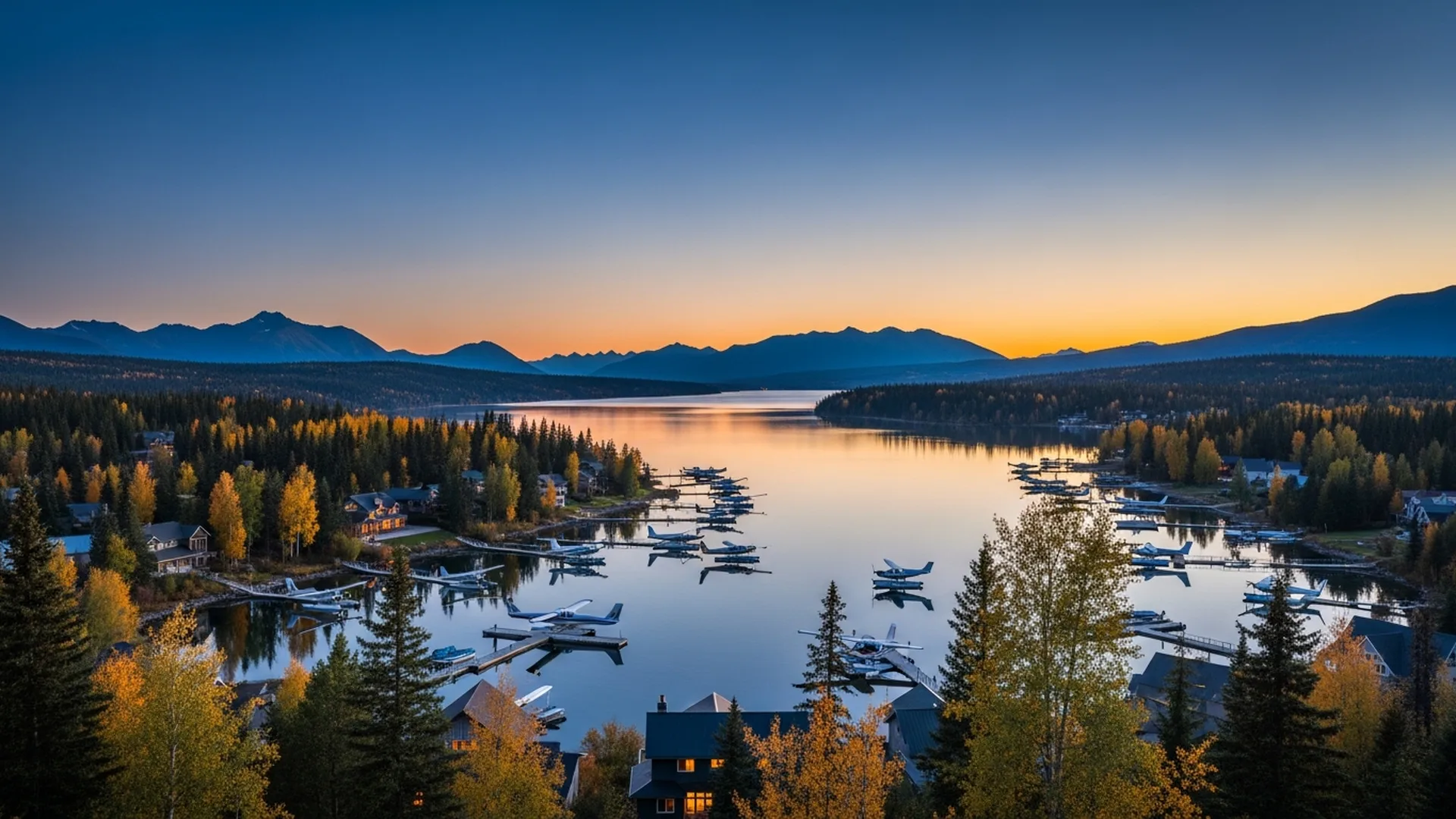
Sand Lake is a West Anchorage neighborhood built around a cluster of lakes — Sand Lake, DeLong Lake, and Jewel Lake — roughly four miles from Ted Stevens Anchorage International Airport and next to Kincaid Park, the southern end of the 11-mile Tony Knowles Coastal Trail. Its homes range from established 1950s ranch and traditional houses on wooded lots east of Sand Lake Road to newer contemporary custom builds to the west. The neighborhood's distinctive luxury draw is lakefront living with float-plane potential, since Sand Lake is one of the Anchorage-area lakes considered float-plane friendly. Because parcels vary so widely in age, water frontage, and utility service, Sand Lake rewards careful, lot-by-lot due diligence on water access, well-and-septic status, and airport proximity.
Of all the neighborhoods I show clients across West Anchorage, Sand Lake is the one where two buyers can walk the same block and want completely different things — one chasing a wooded, established home a mile from Kincaid Park, the other after a lakefront lot where a float plane could taxi up to the backyard. Both are right, because Sand Lake isn't one product. It's a lake district that grew in layers from the 1950s onward, and the value story changes depending on which layer — and which shoreline — you're standing on.
What follows is a working local's read on the neighborhood: where it sits, what its housing stock actually looks like, what the lakefront and float-plane premium really means, and the parcel-level checks that separate a smooth Sand Lake purchase from an expensive surprise. I'll flag clearly where a fact is well-documented and where you genuinely need to verify at the specific address.
- Sand Lake sits in West Anchorage, about four miles from Ted Stevens Anchorage International Airport via Jewel Lake Road and adjacent to roughly 1,400-acre Kincaid Park.
- Housing stock spans the 1950s to today: established ranch and traditional homes east of Sand Lake Road, newer custom subdivisions to the west — condition and finish quality vary widely by parcel.
- Sand Lake is one of the Anchorage-area lakes considered float-plane friendly, making lakefront parcels with a ramp or dock the neighborhood's rare luxury draw.
- Kincaid Park is the southern terminus of the 11-mile, fully paved Tony Knowles Coastal Trail running along Cook Inlet to downtown Anchorage.
- Utility service varies by lot: much of West Anchorage is on public water and sewer, but some parcels still use on-site well and septic — confirm with AWWU and follow the Municipality's on-site program.
- Nearby Campbell Lake — Anchorage's largest lake at about 123 acres — has been the subject of an ongoing legal dispute over whether it is public or private.
- Airport proximity is a real, location-specific factor: runways send most traffic over the water, but the northern part of the neighborhood hears more overflight.
Where Is Sand Lake, and What Defines It?
Sand Lake occupies the southwest quadrant of the Anchorage Bowl, in West Anchorage. Getting around is straightforward: Jewel Lake Road runs the spine of the neighborhood and leads about four miles to the airport, while the Walter J. Hickel Parkway (Minnesota Drive) carries you north toward downtown. Its western edge dissolves into Kincaid Park, one of Anchorage's signature open spaces at roughly 1,400 acres of forested trail, Nordic skiing, and a Cook Inlet beach.
What actually defines Sand Lake is water. The neighborhood is named for its own stocked lake — which has public boat launches, including one on 80th Avenue — and it shares the district with DeLong Lake and Jewel Lake. Unlike a view neighborhood where the value is a distant panorama, here the premium sits at the water's edge itself: docks, boat access, and on select parcels, float-plane use. That distinction matters when you're pricing a home, because "near the lake" and "on the lake" are two very different assets in this part of Anchorage.
| Attribute | Sand Lake, West Anchorage |
|---|---|
| Location | Southwest Anchorage Bowl; ~4 mi from the airport via Jewel Lake Road |
| Housing stock | 1950s to present; ranch/traditional east of Sand Lake Rd, newer custom west |
| Signature luxury feature | Lakefront living with float-plane potential on select parcels |
| Water bodies in district | Sand Lake, DeLong Lake, Jewel Lake (Campbell Lake to the southeast) |
| Recreation | Kincaid Park (~1,400 ac); Tony Knowles Coastal Trail (11 mi, paved) |
| Utilities | Varies by parcel: public water/sewer or on-site well & septic |
| Downtown commute | ~9 mi north via Minnesota Drive / Walter J. Hickel Parkway |
What Does Sand Lake's Housing Stock Actually Look Like?
This is where Sand Lake surprises out-of-market buyers. The homes here date back to the 1950s and have been added to continuously ever since. East of Sand Lake Road, you generally find established ranch-style and traditional houses set among mature trees. Head west and you move into newer subdivisions with contemporary custom builds — genuinely current construction, including homes completed in the last year or two.
For a luxury buyer, that layered history is the single most important thing to understand. Unlike a subdivision where everything was built to one spec in one decade, Sand Lake asks you to evaluate each home on its own terms: a wooded acre with a mid-century home and a mature landscape is a fundamentally different purchase — and a different renovation project — than a just-finished custom residence with radiant in-floor heat and high-end finishes. My design background is where I earn my keep here; the question isn't just "is this a nice house," it's "which of these finishes and systems will still be earning their premium after ten Alaska winters."
What Makes Lakefront and Float-Plane Homes in Sand Lake Special?
Anchorage is arguably the float-plane capital of the world — nearby Lake Hood is the busiest seaplane base on the planet, handling on the order of 190 to 235 operations a day, with tie-down slots so scarce that families reportedly pass them down like heirlooms and waiting lists run for years. That scarcity is exactly why a private lake parcel where you can keep your own plane is such a rare asset. Pilots describe the appeal simply: walk out the back door, untie the plane, taxi to the water lane, and fly — no commute to the airport, no hangar rental.
Sand Lake is documented as one of the Anchorage-area lakes considered float-plane friendly. That said, this is precisely the kind of feature where I tell buyers not to assume: whether a given parcel truly supports float-plane use depends on the specific water body, the parcel's frontage and easements, and any homeowner-organization rules. Lakefront supply is genuinely thin — at various points recent listing data has shown only a handful to about a dozen waterfront homes on the market in the Sand Lake area at once — so when the right parcel appears, the diligence has to already be done.
Publicly reported Sand Lake sale figures reflect the neighborhood's full price range — from condos and starter homes to custom lakefront residences — so a single "median" number tells you little about the luxury tier specifically. Aggregator medians for the Sand Lake area have recently sat in roughly the low-$400,000s, but lakefront and large-lot custom homes trade well above that. Treat any headline median as a floor for the neighborhood, not a gauge of its top end, and ask for lakefront-only comparables when pricing a waterfront parcel.
What Do You Need to Check on a Sand Lake Property Before You Buy?
Three pieces of due diligence matter more in Sand Lake than almost anywhere else in West Anchorage, and all three are things a listing photo can't tell you.
Sand Lake strengths
- Rare lakefront and float-plane potential on select parcels
- Immediate access to Kincaid Park and the Coastal Trail
- Wooded, established lots with genuine privacy east of Sand Lake Road
- Mix of established homes and current custom construction
Verify before you offer
- Airport-proximity noise, which varies by location within the area
- Water/sewer vs. on-site well & septic on the specific parcel
- Documented groundwater-quality concerns historically noted for the Sand Lake / Kincaid area (e.g., arsenic) on well systems
- Exact lakefront rights, easements, and float-plane rules
1. Water and sewer service. West Anchorage has a long dual history here. Public wastewater service in the area traces to the early 1970s, when the Greater Anchorage Area Borough acquired the Sand Lake wastewater system, and per the Anchorage Water & Wastewater Utility (AWWU) the certificated sewer service area now encompasses nearly all of the Municipality. But not every parcel is connected — AWWU still receives septage from on-site systems on lots outside direct service, and only offers service within its certificated boundaries. So confirm the exact address's status with AWWU. If a home is on well and septic, follow the Municipality of Anchorage On-Site Water & Wastewater Program and Alaska DEC requirements — and note that septic testing needs unfrozen ground, which makes timing part of the deal.
2. Groundwater quality on wells. In West Anchorage planning discussions, the Sand Lake and Kincaid area has been specifically flagged for naturally occurring arsenic in groundwater. If a parcel draws from a private well, current water testing is not optional — it's fundamental.
3. Airport proximity. Sand Lake sits near Ted Stevens Anchorage International Airport, and living near it comes with some overflight noise. The runways are oriented so aircraft mostly fly over the water, but the northern part of the neighborhood still gets more of it. This is a genuinely parcel-specific and time-of-day-specific factor — walk the exact lot before you commit.
How Does Sand Lake Compare to Nearby Campbell Lake?
Buyers drawn to Sand Lake's lakefront often ask about Campbell Lake to the southeast, and it deserves an honest answer. Campbell Lake is the largest lake in Anchorage — about 123 acres — and it's man-made, formed in the late 1950s when Campbell Creek was dammed. It's long been described as a "private" lake ringed by high-value homes.
But "private" is exactly the word I won't repeat uncritically, because it's legally contested. In December 2019 the State of Alaska and the Municipality of Anchorage issued a joint statement asserting that Campbell Lake is a public lake with public access, and the State subsequently filed suit to establish that in court. If you're weighing a Campbell Lake parcel, treat lake access and use rights as an open legal question and get current, parcel-specific legal counsel — don't rely on the neighborhood's reputation. Sand Lake, by contrast, has clearly public lake access with established boat launches, which is a meaningfully different ownership picture.
Thinking of Selling in Sand Lake? What Drives Value Here
If you own in Sand Lake, your pricing conversation is unusual because the neighborhood's comparables are so uneven. A lakefront custom home and a mid-century home a few blocks inland can't be priced off the same set of sales. When I prepare a valuation here, I isolate the right comparable set first — lakefront-with-water-rights, wooded-established, or newer-custom — then account for the parcel-level factors that swing Sand Lake numbers most: verified water frontage and float-plane eligibility, utility service, distance from the heavier airport overflight, and the condition and finish quality of the home itself.
That last point is where my design training pays off for sellers. Knowing which finishes and systems read as "current" to a luxury buyer — and which quietly date a home — lets us target pre-list improvements that actually move the sale price rather than just spending money. When you're ready, I can build you a Sand Lake-specific market picture and a home value estimate grounded in the right comparables, not a blended neighborhood average.
- Anchorage Water & Wastewater Utility (AWWU) — certificated service area, on-site septage handling, and West Anchorage system history (awwu.biz; Municipality of Anchorage AWWU history and budget documents).
- Municipality of Anchorage, West Anchorage District Plan utilities materials — note on arsenic in Sand Lake and Kincaid groundwater; on-site water/wastewater context.
- Alaska Department of Environmental Conservation (DEC) — on-site well and septic requirements (18 AAC 72).
- Tony Knowles Coastal Trail — 11-mile paved coastal trail terminating at Kincaid Park (Wikipedia; Visit Anchorage; Municipality of Anchorage parks).
- Kincaid Park size and amenities; Sand Lake stocked fishing and public boat launches (neighborhood and parks references).
- Lake Hood Seaplane Base — operations volume and tie-down scarcity establishing float-plane context (Wikipedia; Alaska DOT&PF / Ted Stevens Anchorage International Airport; Alaska Economic Development Corp. impact study).
- Campbell Lake public-vs-private status — State of Alaska & Municipality of Anchorage December 2019 joint statement; subsequent State lawsuit; lake size and origin (Alaska Public Media; Wikipedia).
Exploring Sand Lake & West Anchorage lakefront?
Let’s make sure the lot, the water rights, and the utilities check out before you fall for the view.
Frequently Asked Questions
Sand Lake is a residential neighborhood in West Anchorage, roughly four miles from Ted Stevens Anchorage International Airport along Jewel Lake Road, and a short drive from Kincaid Park at the southwest corner of the Anchorage Bowl. It sits within a cluster of lakes — Sand Lake, DeLong Lake, and Jewel Lake among them — and reaches the coast at Kincaid, where the 11-mile Tony Knowles Coastal Trail terminates.
Sand Lake is one of a handful of Anchorage-area lakes considered float-plane friendly, so some lakefront parcels support private float-plane use with a ramp or dock. Availability is limited and specific to the parcel and the water body. If float-plane use is your goal, verify the exact lake, the parcel’s water frontage and easements, and any homeowner-organization rules before you write an offer — assumptions here are the most common source of buyer disappointment.
Sand Lake’s housing stock dates back to the 1950s and has been added to ever since. East of Sand Lake Road you generally find established ranch-style and traditional homes on wooded lots; heading west, you find newer subdivisions and contemporary custom builds. That range means one street can hold a mid-century home and a recently completed custom residence, so condition and finish quality vary widely and are worth evaluating parcel by parcel.
It varies by parcel. West Anchorage has a long history of both — the area’s public wastewater system traces back to a 1970s municipal acquisition, and public water and sewer have expanded through West Anchorage over the decades — but some lots still rely on on-site well and septic systems. Confirm the specific parcel’s service with the Anchorage Water and Wastewater Utility, and if it is on-site, follow the Municipality of Anchorage On-Site Water and Wastewater Program and Alaska DEC requirements for testing before closing.
Its status has been legally contested. Campbell Lake — the largest lake in Anchorage at about 123 acres and a man-made lake created when Campbell Creek was dammed in the late 1950s — has long been described as private, but the State of Alaska and the Municipality of Anchorage issued a joint statement in December 2019 asserting it is a public lake with public access, and the State later sued to establish that in court. Buyers considering a Campbell Lake parcel should treat access and use rights as an open legal question and get current, parcel-specific legal guidance.
Sand Lake sits next to Kincaid Park, roughly 1,400 acres of forested trails that host hiking, mountain biking, and a Nordic ski network, plus a beach on Cook Inlet. Kincaid is the southern terminus of the 11-mile Tony Knowles Coastal Trail, which runs paved along the coast to downtown Anchorage. The neighborhood also includes Jewel Lake Park and Connors Bog Dog Park, and Sand Lake itself is stocked for fishing with public boat launches.
Sand Lake is close to Ted Stevens Anchorage International Airport, one of the world’s busiest cargo hubs, so proximity to flight paths is a real factor that varies significantly by location within the neighborhood. Runways are oriented so aircraft largely fly over the water, but the northern part of the area can hear more overflight noise. This is a place-specific trade-off worth checking on the ground, at the exact parcel, at different times of day.